

Thresholds of relational belonging
On tending, rupture, and relationship with Land—with a ritual offering of milk

We live in a culture that prizes independence as the highest virtue, a colonial inheritance disguised as self-love. Belong to yourself, they say. What if belonging is relational—reciprocal, imperfect, and alive?
Relational belonging invites us to stay when things get uncomfortable; to let rupture be the beginning of repair; to trust that community is cultivated through grace and generosity; that relations extend to all kin, the Commons1, and ancestors; and to trust that we have the capacity to remain human together through complexity, collapse, and rebirth.
the commodification of self-belonging
It’s not our fault we got confused about belonging. Brands continue to sell the idea of belonging as self-(determination, acceptance, expression, etc.):
Reebok’s “U.B.U.” campaign used Emerson to turn individuality into a slogan
Dove’s student project “I define myself” tried to counter the beauty industry while still speaking the language of self-definition and consumerism
Klarna’s Latitude campaign used the line, “The best kind of belonging is when no one has to change to fit in,” which sounds compassionate until you remember that belonging is more complicated than staying the same
Gap declared “Everyone Belongs,” folding the entire question of community into the glossy folds of a marketing campaign
These messages form and reflect the waters we swim in—that belonging is an inward assertion rather than a lived practice with real people, stakes, and responsibilities. Our overculture has turned the idea of “just be yourself” into a doctrine ladled with pressure and performance, bypassing systems of oppression that violently indicate that some don’t belong.
When self-belonging falls short, what are we left with?
the ache beneath “belonging to self”
Much of what I once understood about belonging as a white woman came from Brené Brown’s work:
“True belonging is the spiritual practice of believing in and belonging to yourself so deeply that you can share your most authentic self with the world and find sacredness in both being a part of something and standing alone in the wilderness. True belonging doesn’t require you to change who you are; it requires you to be who you are.”— Brené Brown, Braving the Wilderness: The Quest for True Belonging and the Courage to Stand Alone
There is truth in this, and this one quote oversimplifies her body of work, but something essential is missing. I am no longer hiding in plain sight, and we are celebrating authenticity—but why is this so lonely?
It feels important to note here that:
The book title ends with “the Courage to Stand Alone.”
Brown’s guiding principle is this Maya Angelou quote:
“You are only free when you realize you belong no place—you belong every place—no place at all.”
It feels like a misreading to treat Angelou’s words as an endorsement of inner belonging or individual freedom from approval.2
Loneliness comes from cultivating authenticity without ground or relational belonging. Tyson Yunkaporta names the rupture many of us inherited long before we were born:
“Most of us have been displaced from those cultures of origin, a global diaspora of refugees severed not only from Land, but from the sheer genius that comes from belonging in symbiotic relation to.” — Tyson Yunkaporta, Sand Talk: How Indigenous Thinking Can Save the World
Belonging that stops at the edges of the self can’t address the depth of displacement that lives in the body. Between the self and the collective is a threshold—delicate, charged, and demanding honesty. Shifting from individualism to cocreation/relation is a polar reversal in world sense.
I grew up between worlds
My parents worked for the Peace Corps and the Inter-American Development Bank—institutions rooted in the global development paradigm and its colonial undertones. We lived in Antigua and Trinidad and returned to Northern Virginia on and off. My childhood was shaped by movement and multiplicity.
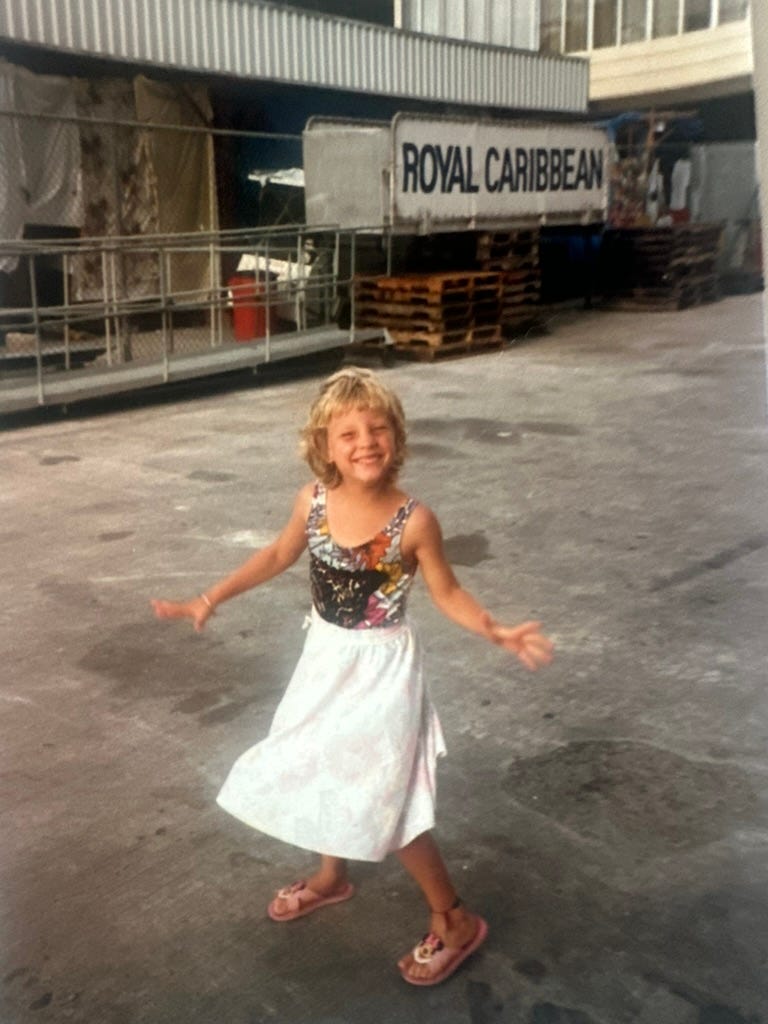
I am what sociologists John and Ruth Useem called a third culture kid: someone raised among cultures that aren’t their parents’ or their passport country. We lived in liminal space, at home everywhere and nowhere.
I was taught that belonging begins and ends in the self and my family of origin. Layer this with an emotionally immature family of origin, hypervigilance, enmeshment, and the conditioning of whiteness absent cosmologies.
Belonging became a real clusterf*ck for me.
I treasure the gifts I received: caretakers from Guatemala, Antigua, and Trinidad; waterfalls and herbal remedies; playing in banana trees; reading the stories of Anansi; the recognition that variety is the spice of life and the humility that teaches—early forms of belonging I didn’t yet know how to hold.
The same skills that kept me safe taught me self-betrayal. I became fluent in adapting and masking. The same movement that broadened my view blurred parts of me I am still reclaiming. Liminality shaped me and fragmented me in equal measure, and my devotion to wholeness grew from that fragmentation.
relationship is the prima materia
Recently, I’ve spent time communing with my beloved ancestors, reveling in nature, and nurturing friendships, feeling into my bones the truth of these words:
Eventually, I said to them: you can’t call me into accountability if we’re not in relationship with each other. Accountability without relationship is just performance. You cannot hold someone accountable who you do not love, because love is what calls someone into better behavior. And love requires proximity. —Christabel M-G RN, BSN in Decoloniality is the practice of relational truth and accountability
The absence of relational nets is a cultural failure. But as wisdom teacher Ro Marlen reminds me often, “It’s not your fault, but it is your responsibility.”
right relationship
Here’s what I know to be true: belonging is inseparable from right3 relationship—with the Land under our feet, the self as one expression of the whole, the beings who share breath with us, and Spirit moving through all things. I’m working on the words for right relationship for self, others, and Spirit—let’s begin with Land. Right relationship with Land honors place as a living relative. Land asks for listening, tending, and care over extraction.
“We belong to the Land. What happens to the Land happens to us.” — Ro Marlen, European animist wisdom teacher
To question belonging is to admit that I don’t know anything about it and that I am far removed from any ancestors that did. With a humble heart, I am here to tend, tend, tend—and to remember. Somewhere, far, far back, people now conditioned as white lived sustainably, dreaming, dancing, and dying on a Land, as part of the Land.
“An Indigenous person is a member of a community retaining memories of life lived sustainably on a Land base, as part of that Land base.” — Tyson Yunkaporta, Sand Talk: How Indigenous Thinking Can Save the World
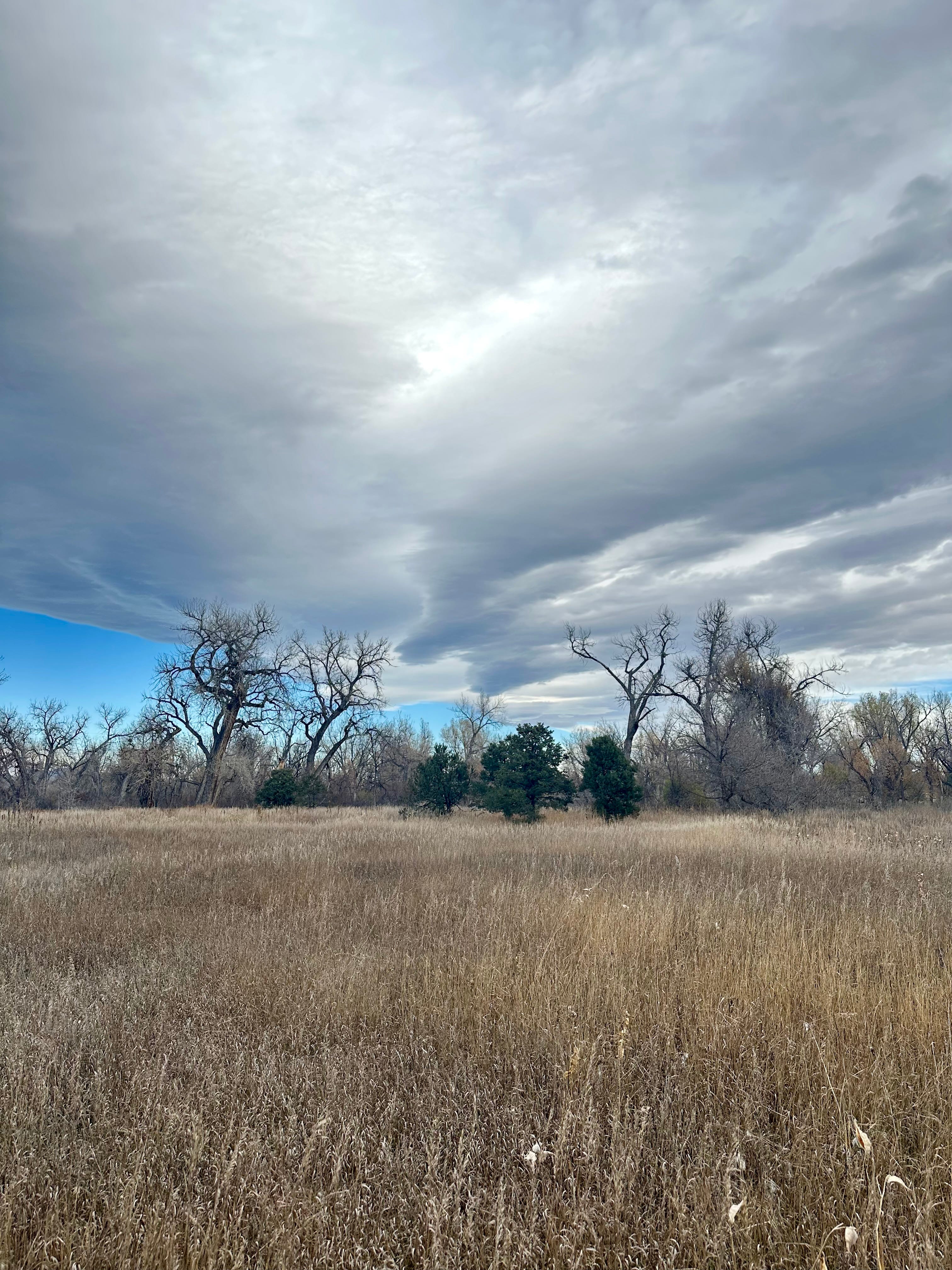
Orphaned from cosmologies of my bloodlines, I have so many questions. I’ve been walking in the suburbs where plant and animal kin (hey, muskrat!) seem to find their ways to belong.
I carry questions and lay them before the council of Grandmother Cottonwoods, their bark cool beneath my hands.
How can you belong while living on stolen land? How can you belong when forcibly removed or separated from your ancestral lands? How can I reject the conditioning of whiteness as it relates to belonging (and everything else)? What does it mean to belong when I am ruptured from my family of origin? What shape will belonging take for my five-year-old son? What does belonging look like during collapse and rebirth? What thresholds of belonging am I tending in this moment? What is the shape and texture of repair? Where am I showing up as transactional? On and on…


belonging when you are sensitive
What I know to be true: for those who feel deeply, belonging is rarely straightforward. Sensitivity is often framed as fragility, yet in many animist and ancestral traditions, it is a perceptive gift, a way of registering imbalance or harmony before others notice. Angell Deer speaks of this role:
Sensitivity often carries its own medicine. Some of us are built for the threshold, with nervous systems tuned to the quiet and the subtle. Belonging for us forms through attunement, reverence, sensory truth, and communion with Land, ancestors, and the unseen.
ruptures and reckonings
What I know to be true: there are relationships I’ve lost that still ache in my body. My brother, who was once my mirror; friendships that carried pieces of my story I cannot access alone; and endings that arrived quietly and others that arrived like wildfire. Grief threads through all of it, not asking me to fix or solve, but to sit with the unknown and painful.
What if rupture is a rite of passage that teaches the anatomy of grace and the surrender that only grief can ask of us?
Grace doesn’t erase what happened or ask you to stay in relationship when abuse or gaslighting is present—it softens the grip of avoidance so we can hold what remains. A repaired relationship is not always the endpoint. Sometimes the work is to wish someone well across a distance that won’t close. Sometimes the work is to acknowledge that rupture clarified what was never stable to begin with.
Rupture illuminated my yearning to belong in meaningful ways.
Others may hear my story and say to me, Where are your people? as Christabel notes below (this post is profound, btw). I’ve wondered the same, but the burden has lifted since tending and remembering my animist lineages—and I’m learning about community, relationship, and accountability.
So when I see people sharing their medical conditions with strangers, I don’t feel judgment, I feel grief. Because what does it mean that you have no one in your life to bring you food, care for your child, or sit with you in your illness?
Where are your people? —Christabel M-G RN, BSN in Decoloniality is the practice of relational truth and accountability
Grace is a balm as we journey toward right relationship, moving from transaction to tending. It makes space for imperfection and stays steady in complexity as we explore what tending feels like.
room for mutual becoming
Belonging is not the end of the work. It’s how the work begins. To be in right relationship with Land, self, other, and Spirit is to consent to the messiness of being alive together. What makes that possible and what does it ask of us?
May we find the courage to show up and stay in the room, and the grace to make space for the wholeness of others to be in the room.
spellcast: a ritual offering to Land
In many ancient and Indigenous traditions, milk is a bridge substance. It is both food and offering, nourishment and prayer. Before colonial agriculture reshaped its meaning, milk was poured onto the earth to honor the spirits of place, ancestors, and deities of fertility and thresholds. This was about relationship.
It has been poured into the soil for Brigid, carried to rivers for serpents, and offered in ritual to ancestors across continents. Milk is nourishment, prayer, and tending. Milk lines are the quiet streams of nourishment and wisdom that move between bodies, Land, and lineage.
milk in ritual and remembrance
Pour a bowl of milk on the Land for nourishment and reciprocity. This can be on a patch on a potted plant or on the forest floor. Add a pinch of salt. Speak the names of those who showed you how and why to stay. If you feel called, say the prayer below or make up your own invocation.
Breath that carries all breath, pulse that steadies our names, hold me close to the weave. Let me find my place in the fabric again, not as a thread apart but as a shimmer held by the whole. Let grace move through me the way mycelium moves under the forest floor, nourishing what I can’t see. Help me meet others with tenderness instead of transaction. Soften the instinct to step away. Guide me back to the circle when fear rises. I offer this care to the Common4—the quiet council of kin, Land, and future ones. May this tending reach beyond me and mend what forgetting has frayed. So may it be, and so may we belong.
I invite you to learn about the original stewards of the land you’re living on.
The Commons refers to shared resources—land, water, air, language, culture—that exist beyond private ownership. In medieval Europe, “the common” or “the commons” was where people grazed animals, gathered wood, and lived in reciprocity with land held collectively. The enclosure of the commons (when shared lands were seized for private use) marked a turning point in colonial capitalism and in the very idea of belonging—transforming relationship into property.
Philosophically, writers like Silvia Federici, Robin Wall Kimmerer, and David Abram all gesture toward this idea in different ways. Federici calls for a “reclaiming of the commons” as a form of resistance to extractive systems. Kimmerer speaks of the “honorable harvest” as an ethic of giving back to the shared pool of life. Abram refers to the more-than-human world as “the commonwealth of breath.” The phrase “to the Common” gathers that shared moral lineage—an offering to the larger weave rather than a specific deity or entity.
Freedom from approval seems a striking privilege compared to physical freedom or freedom from violence. While Brown addresses dehumanization, we’re missing nuance.
Please exchange right as in wrong/right with right as in birthright/lore/law. For others conditioned as white, I recommend the gentle work shared in Ro Marlen’s Belonging to Place.
In Indigenous and animist worldviews, what we might call “the Common” is the living network of reciprocity itself, the kinship web of Land, ancestors, plants, animals, spirits, and future generations. It’s the field of relationship that holds all life in mutual responsibility. To make an offering “to the Common” is to give back to that shared field, to the unseen community of beings that sustain life.
I read your work, then I sit and I read it again because there is so much depth and nuance and discovery here. You have me thinking a lot about the way culture is constantly responding to what came immediately before it; it's moving away from what wasn't true in highly imperfect ways. Yet we find ourselves back at those same fundamental paradoxes. I do belong to myself, and to my ancestors, and to the community, and to the land -- we just have to trace the line back through it all. I'm so grateful for you and for these reflections.
Woman, thank you for all the love, rage, grief, truth, curiosity, and care you have poured into these words. I feel fortified and seen and invited by this potent article. Well met on the path my sister.